
2010–2013: BAWAG CONTEMPORARY
Luisa Kasalicky
en suite
10/2/2011—24/4/2011


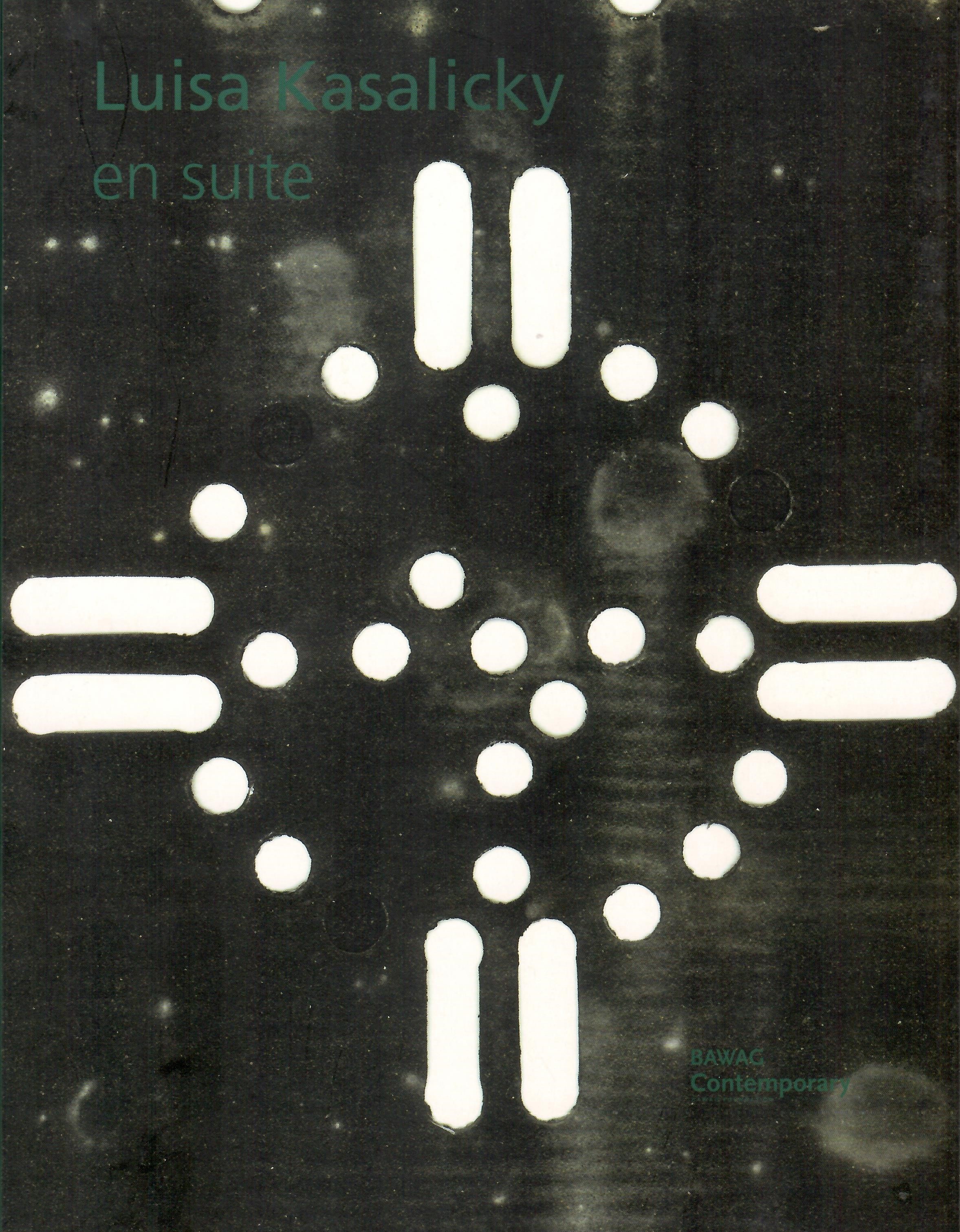
BAWAG Contemporary is presenting the first institutional solo exhibition by Luisa Kasalicky. The starting point of her work, in which the relationship between interior and exterior, private and public space is a central theme, is painting, which in recent years has increasingly been extended into space. Initially, the artist combined installation elements with parts directly painted on the wall, but since 2006, she has been using materials from hardware stores, carefully selected for their color, texture, and materiality, to expand the concept of painting.
Under the title en suite, the Austrian artist (born in 1974 in Prague) presents new sculptures, installations, and wall works, which she precisely adapts to the architectural conditions of the exhibition space. Different fragments overlap, creating a painterly and sculptural overall picture. The temporary works completely take possession of the space, counteracting it with a tense, independent artistic order. The specific industrial colors (light blue, pink, green, yellow) of the early works, made from doors, windows, tiles, and carpets with their 1960s and 1970s aesthetics, are now replaced by inspirations from a wide range of sources – from Baroque aesthetics to 1920s approaches, as well as traditional craft techniques.
Luisa Kasalicky aims for a conglomerate of diverse styles, as seen in the setting of her favorite film The Fall of the House of Usher by Jean Epstein and Luis Buñuel, where Baroque elements coexist with a medieval knight's armor, a golden swan neck, and a floor pentagram. However, these inspirations remain in the background in the artist's completed works, where material colors such as brick red, rust protection green, leather black, lime white, copper, and brass dominate. Furthermore, references to Minimalism can be found, as well as influences from Schwitters, Tuttle, and Artschwager. Opposites are effortlessly united here: the grand meets the banal, the hard meets the soft, the figurative meets the abstract. Whether Kasalicky uses "soft" industrial materials like carpets, rubber, and leather, or "hard" ones like metal, roofing felt, tiles, and parquet, she continues the old dialogue between the nature of abstraction and representation in these works, challenging the traditional use and meaning of painting with a range of materials and textures that evoke everyday experiences.
Curator: Christine Kintisch
Press: Christina Werner
Under the title en suite, the Austrian artist (born in 1974 in Prague) presents new sculptures, installations, and wall works, which she precisely adapts to the architectural conditions of the exhibition space. Different fragments overlap, creating a painterly and sculptural overall picture. The temporary works completely take possession of the space, counteracting it with a tense, independent artistic order. The specific industrial colors (light blue, pink, green, yellow) of the early works, made from doors, windows, tiles, and carpets with their 1960s and 1970s aesthetics, are now replaced by inspirations from a wide range of sources – from Baroque aesthetics to 1920s approaches, as well as traditional craft techniques.
Luisa Kasalicky aims for a conglomerate of diverse styles, as seen in the setting of her favorite film The Fall of the House of Usher by Jean Epstein and Luis Buñuel, where Baroque elements coexist with a medieval knight's armor, a golden swan neck, and a floor pentagram. However, these inspirations remain in the background in the artist's completed works, where material colors such as brick red, rust protection green, leather black, lime white, copper, and brass dominate. Furthermore, references to Minimalism can be found, as well as influences from Schwitters, Tuttle, and Artschwager. Opposites are effortlessly united here: the grand meets the banal, the hard meets the soft, the figurative meets the abstract. Whether Kasalicky uses "soft" industrial materials like carpets, rubber, and leather, or "hard" ones like metal, roofing felt, tiles, and parquet, she continues the old dialogue between the nature of abstraction and representation in these works, challenging the traditional use and meaning of painting with a range of materials and textures that evoke everyday experiences.
Curator: Christine Kintisch
Press: Christina Werner